Santorini Day Tours
I’m Serious Day Tour Man AI, your day trip expert. Ask me anything — where to go, how to get there, and what’s actually worth your day.
Santorini is a caldera rim, not a conventional island, and its best days follow the geology: a boat onto the volcano that made the postcard, a Bronze Age city the eruption buried and preserved, a rim-top hike that outranks every paid excursion, and vineyards where the vines grow coiled into baskets against the wind.
The honest work here is expectation management. The famous hot springs are lukewarm, the famous sunset has a queue, and the famous red beach has a rockfall problem. The island stands up to every one of these corrections — it just comes out better focused.
Here’s what’s worth a day, with real times and honest trade-offs.

Popular Day Trips
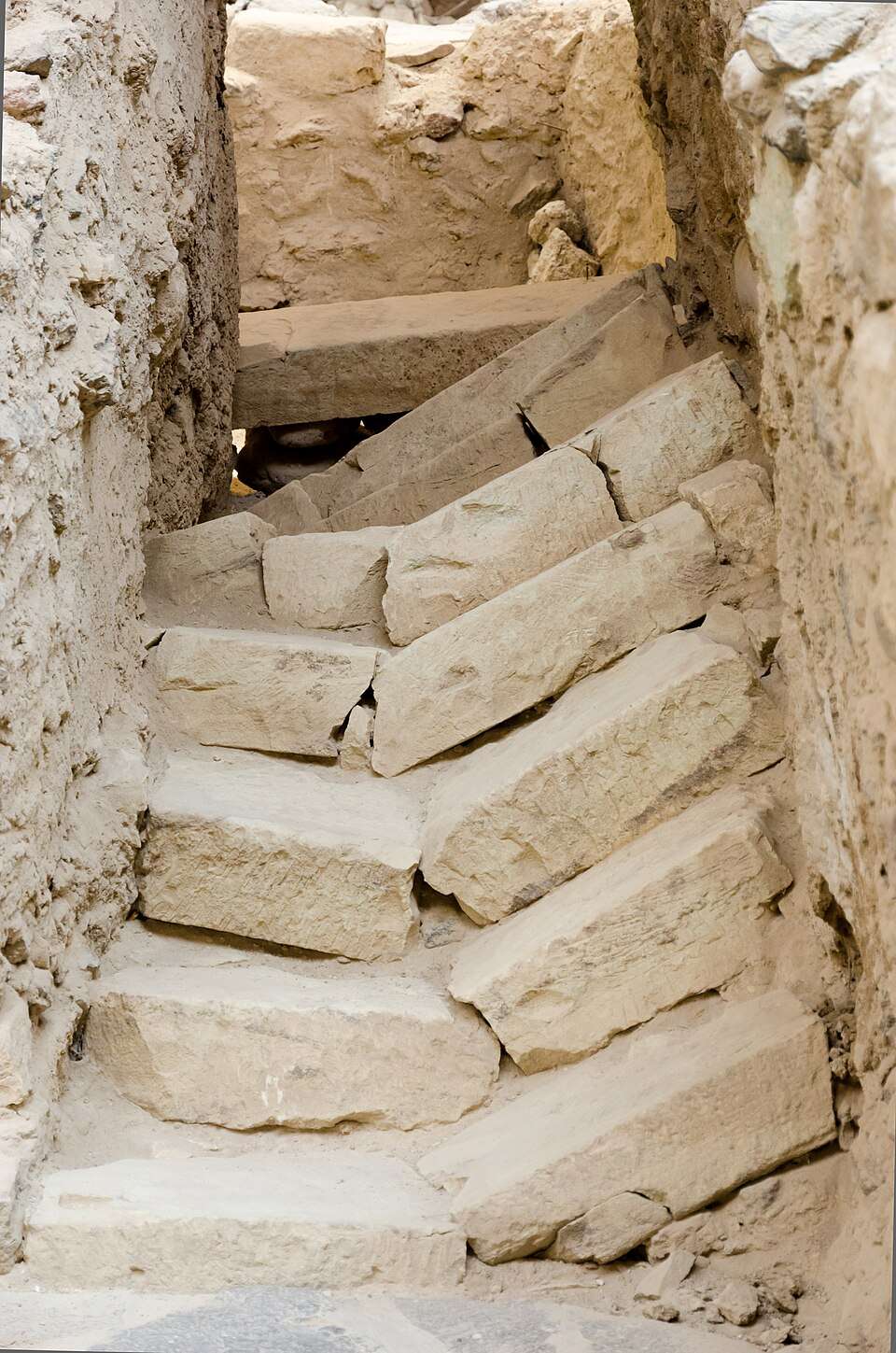
Akrotiri
The Buried City Under One Roof, the Missing Frescoes
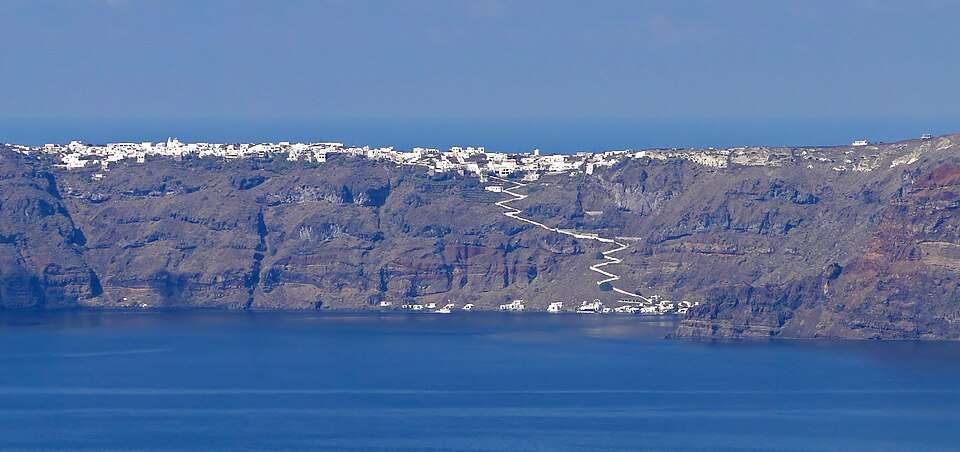
Thirassia
The Island Across the Caldera, the Postcard in Reverse
The Caldera Cruise — Volcano & Hot Springs, Honestly
The classic boat day runs from the old port to Nea Kameni, the black lava island at the caldera’s center. A 30-to-40-minute cinder-path hike gains the crater rims, sulfur vents included, with the whole white-rimmed cliff wall of Santorini arranged around you. Wear real shoes; the beach-footwear contingent suffers visibly.
Then the honesty the brochures skip: the “hot springs” at Palea Kameni are a rust-tinted cove that runs pleasantly tepid, not thermal. You swim to them from the anchored boat, and the iron-oxide water genuinely stains light swimwear. Go for the swim-in-a-caldera novelty, not the spa.
The redeeming third act is Thirassia, the little island across the water — Santorini fifty years ago, a few tavernas at the dock and a cliff-top village above — where the longer cruises stop for a grilled-fish lunch that often becomes the day’s actual highlight. The sunset catamaran versions, dinner aboard, are the premium format and justify it. Sort it simply: history and hiking by day boat, romance by catamaran.
Akrotiri — The Minoan Pompeii
The island’s profound hour sits at its southern end. Akrotiri is a Bronze Age city buried by the great eruption around 1600 BC — seventeen centuries older than Pompeii — excavated under a single bioclimatic roof that lets you walk at street level past three-story houses, drainage systems, and staircases of a civilization at its height. Eerily, the inhabitants seem to have evacuated in time: no bodies, unlike Pompeii, which changes the mood entirely.
Know two things before arrival. First, the famous frescoes — the Spring fresco, the boxing boys, the flotilla — were removed to Athens’ National Archaeological Museum; reproductions and the Fira museum’s local originals, including the gold ibex, fill in on the island. Knowing this beforehand prevents the where-are-the-paintings deflation. Second, the practicalities: entry runs €20 on timed e-tickets, the site closes Tuesdays, and it has shut at short notice for structural checks after seismic activity — confirm current hours before building the day around it.
Pair it with the Red Beach viewpoint next door, photographed from the headland: rockfall risk has repeatedly closed the beach itself, and the signposted view is the safe version of the visit. The lighthouse at Akrotiri point adds the caldera’s quietest sunset.
Read the full Akrotiri day-trip page.
The Fira-to-Oia Hike — The Best Free Thing on the Island
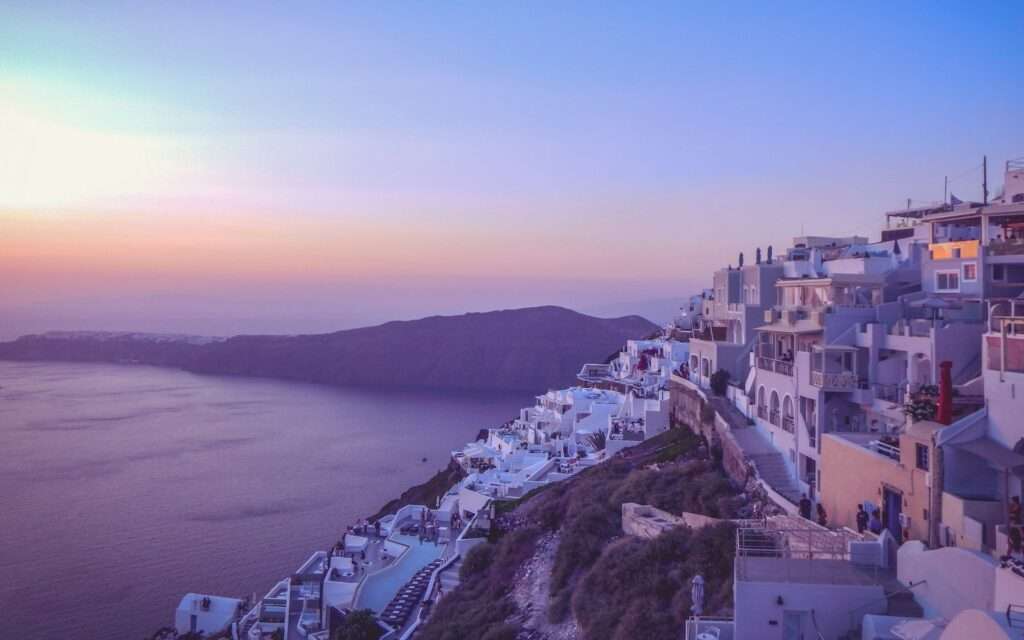
The rim trail runs ten kilometers along the caldera edge, from Fira through Firostefani and Imerovigli to Oia: three to four hours of the exact view every infinity pool is selling, for free. Skaros Rock’s Venetian-castle crag makes the mid-route climb, and Imerovigli’s churches supply the photo sequence.
The logistics: walk it northbound, so you finish in Oia with the evening ahead. Start early or late in summer — the trail is shadeless and the middle hours are brutal. Carry more water than seems reasonable, wear actual shoes for the loose-cinder sections, and take the bus or a taxi back; nobody enjoys the return walk.
Grade it honestly: undulating, not flat, with real climbs out of Fira and into Oia. Moderate walkers finish happily. Flip-flop optimists do not. By the settled consensus of everyone who does it, it’s the best thing on Santorini that costs nothing.
The Wine Country — Baskets Against the Wind
The island’s viticulture is unlike anywhere else. There are no trellises, because the meltemi wind would strip them. Instead, growers weave the vines into kouloura — ground-hugging baskets with the grapes sheltering inside — rooted in volcanic ash that phylloxera never reached, which means root stock here runs centuries old.
The grape is Assyrtiko: bone-dry, mineral, one of the great white wines of the Mediterranean, and the honest reason wine people detour to this island. Vinsanto, the sun-dried sweet wine, is the historical flagship, and the naming argument with Italy’s vin santo is a tasting-room staple.
The circuit: two or three wineries — Santo Wines for the caldera-terrace spectacle, Sigalas or Gavalas for the serious cellars, Venetsanos for sunset with architecture — plus the wine museum in its lava cave for the history-inclined. The who-drives-home rule is enforced by the island’s unforgiving roads: tours or drivers, full stop. Tastings are generous and Assyrtiko’s acidity disguises its strength. Pace accordingly.
The Beaches & the Inland Villages — The Honest Sort
Beach honesty first: Santorini’s beaches are volcanic — black sand and pebbles that reach skillet temperatures by noon, so water shoes are equipment, not accessory — and they are the island’s supporting act, not its headliner. Travelers wanting Greece’s great beaches should look to other islands, and enjoy these for what they are.
The sort: Perissa and Perivolos run the long black-sand strip with loungers and beach bars — the swimmable, organized default. Vlychada’s white-sculpted cliffs give the moonscape backdrop and the connoisseur’s pick. Kamari adds the promenade-town version under the Mesa Vouno headland.
Then the counterweight: the inland villages. Pyrgos, the hilltop former capital, delivers kasteli lanes and blue domes — Oia’s architecture at a tenth of the traffic — and its Easter rooftop-fires tradition is the famous night. Emporio’s fortified medieval core is a genuine labyrinth most tourists haven’t found. Half a day inland recalibrates the whole island.
Oia, Fira & the Sunset Question
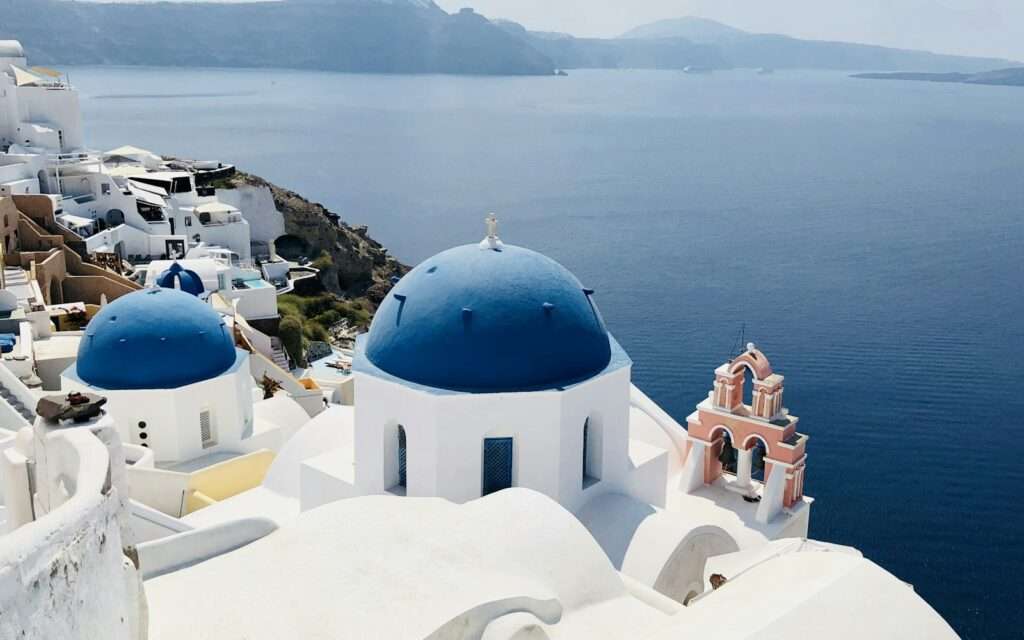
The sunset needs the honesty most, so it goes first. The Oia sunset is genuinely beautiful and genuinely mobbed — the castle viewpoint packs hours early in season, applause included. The alternatives deliver the same sun: the Fira-to-Imerovigli rim (same view, walking room), the Akrotiri lighthouse (quietest), a catamaran deck (the premium answer), or the local trick — Oia at sunrise, when the famous lanes stand empty and the light hits the blue domes from the better direction anyway.
Fira handles the practical town duties. The cable car to the old port is the humane descent — skip the donkey rides on animal-welfare grounds, a judgment the island’s own regulations have been slowly catching up to. The archaeological museum holds Akrotiri’s local originals, and the caldera-edge bars price the view into the drinks with full transparency.
The season math, stated plainly: July and August run hot, full, and expensive — the island at maximum saturation. May–June and September–October deliver the same caldera with room to breathe. And the shoulder secret is April or late October — cool, quiet, half-shuttered but open enough — for travelers who prefer places to crowds. The eating: tomatokeftedes, the island’s intense tomato fritters; fava, the yellow-split-pea signature that has nothing to do with fava beans; white eggplant; and fresh fish priced by the kilo — confirm the weight before it’s grilled, the one restaurant rule the Aegean requires.
Full day-trip pages: Thirassia.
Frequently Asked Questions
Are the Santorini hot springs actually hot?
Lukewarm — a rust-tinted cove you swim to from the boat, pleasant as a novelty and staining to light swimwear. Take the caldera cruise for the volcano hike and Thirassia lunch; treat the springs as a swim, not a spa.
Is Akrotiri worth visiting?
Essential — a Bronze Age city preserved under one roof, older than Pompeii and walkable at street level. Entry is €20 on timed tickets, it closes Tuesdays, and the famous frescoes live in Athens; Fira’s museum holds the local originals.
How hard is the Fira to Oia hike?
Ten kilometers, three to four hours, undulating with real climbs — moderate fitness and proper shoes finish it happily. Go early or late in summer, carry ample water, and ride back.
How do you avoid the Oia sunset crowds?
Watch from the Imerovigli rim, the Akrotiri lighthouse, or a catamaran — same sun, room to breathe. Or flip it: Oia at sunrise is empty, and the light on the domes is better.
When is the best time to visit Santorini?
May–June and September–October — the caldera without the crush. July–August is the island at maximum heat, price, and density; late October trades some services for near-private lanes.